Kill Blue Anime Explained: Studio CUE’s Big Break and Why Fans Are Watching Closely
When I first saw the announcement that Kill Blue was getting an anime adaptation, it immediately felt like one of those projects that could either become a surprise hit or completely fall apart depending on execution.
Written by Tadatoshi Fujimaki, the creator of Kuroko’s Basketball, the series already had strong source material backing it. But the real conversation online wasn’t just about the manga—it was about the studio handling it: Studio CUE.
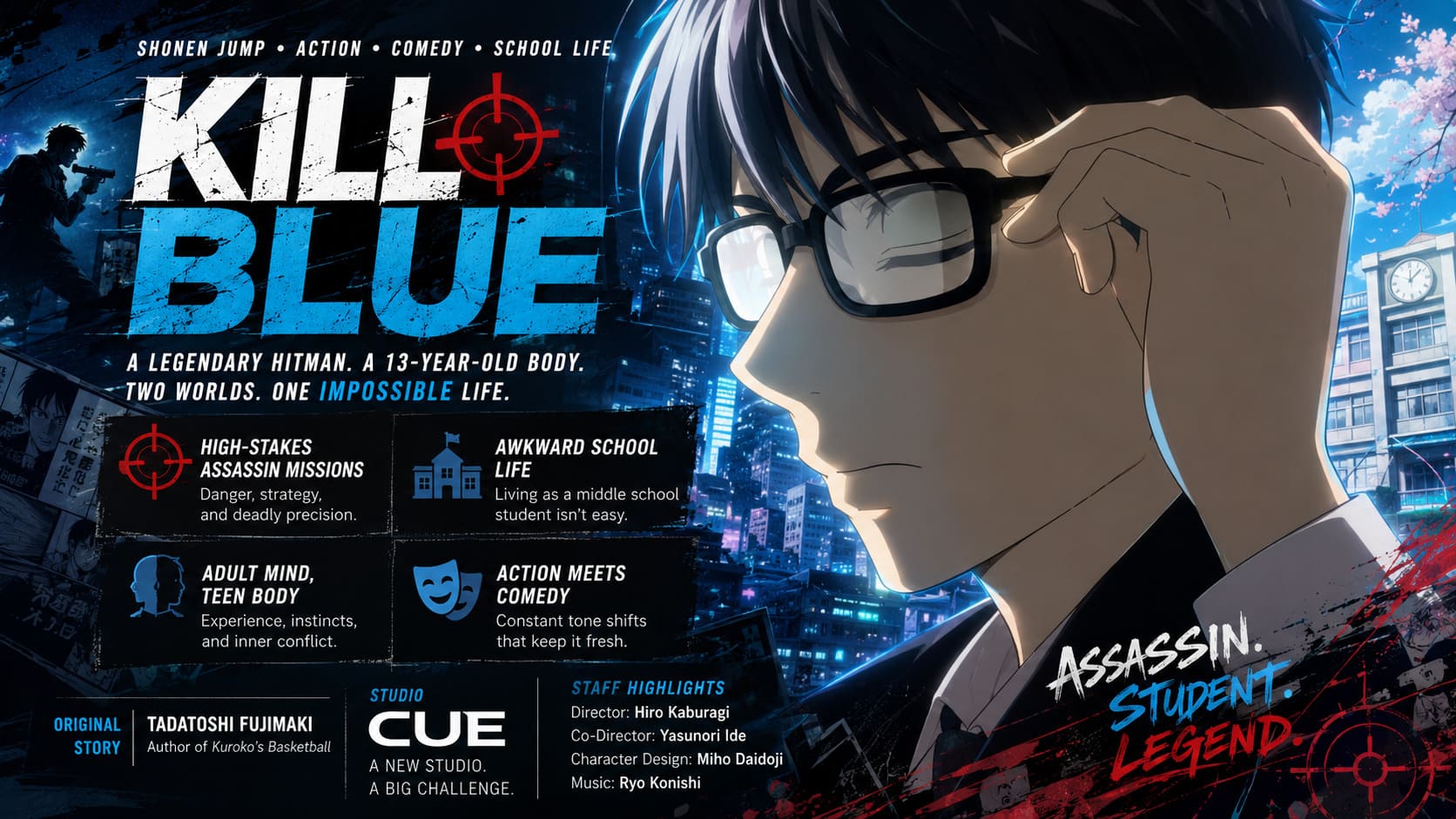
Unlike established giants such as MAPPA or ufotable, Studio CUE was not a familiar name to most international anime fans. That alone made this adaptation a hot topic across Reddit, YouTube, and anime forums.
Could a relatively unknown studio really handle a complex Shonen Jump adaptation that mixes action, comedy, and emotional storytelling?
Kill Blue Anime Review and Release Guide (2026 Season)
A Strange but Addictive Shonen Concept
At its core, Kill Blue is built on a premise that sounds almost ridiculous at first, but quickly becomes intriguing once you understand the execution. The story follows Juzo Ogami, a 39-year-old legendary hitman who has never failed a mission. He is cold, efficient, and feared across the criminal underworld.
Then everything changes after a bizarre incident involving a genetically modified wasp. Juzo suddenly finds himself trapped in the body of a 13-year-old boy. Instead of escaping this situation, he is forced to continue his work while living undercover as a middle school student.
This creates a unique storytelling balance between two completely different worlds:
- High-stakes assassination missions with real consequences
- Awkward and humorous school life situations
- Emotional conflict between adult experience and teenage environment
- Constant tonal shifts between action and comedy
This mix is exactly why the anime adaptation is so dependent on its production quality. If the tone breaks even slightly, the entire concept loses impact.
Rimuru Tempest vs Rudra Full Fight Analysis: Who Wins in Tensura?
Why the Studio Choice Is So Important
Not every anime requires a top-tier studio, but Kill Blue is a special case. It constantly switches between fast-paced combat sequences and everyday school comedy. That means the animation team must handle both intensity and subtle humor without breaking consistency.
A weak adaptation could easily ruin either side of the story. Too much focus on action would remove the charm, while too much comedy would kill the tension. The studio must find a perfect middle ground, and that is why Studio CUE’s role is being closely watched.
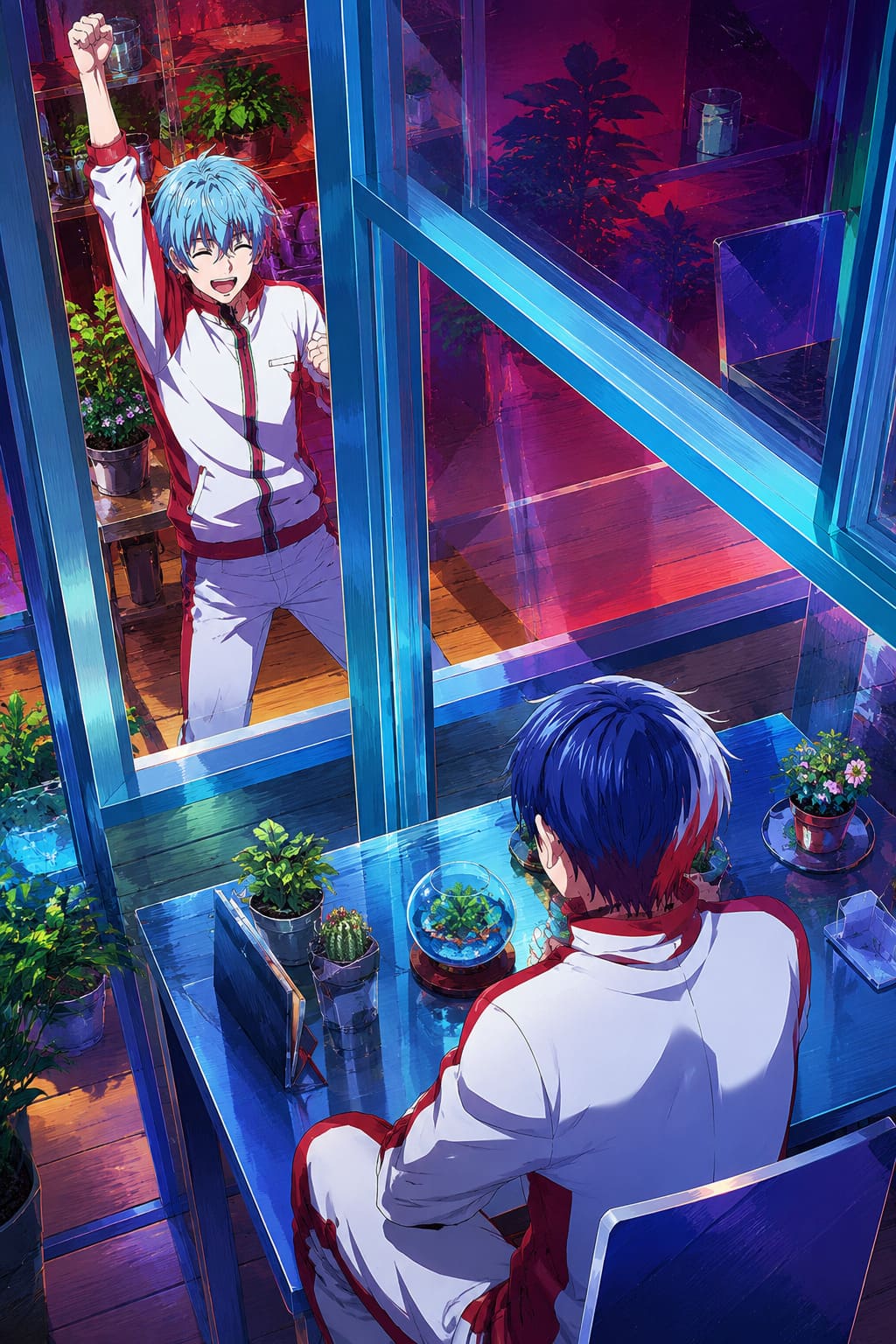
Studio CUE: A New Name With Big Pressure
Studio CUE is not yet a household name in the anime industry. They do not have a long history of blockbuster adaptations, and for many viewers, this is their first time hearing about them. However, that does not necessarily mean they lack talent.
In fact, many modern studios begin exactly like this—formed by experienced animators and directors seeking creative freedom outside large production companies. Studio CUE appears to follow that same pattern, relying more on talent and collaboration than legacy reputation.
Their strengths include:
- Flexible production structure
- Collaboration with experienced freelance animators
- Strong creative leadership from veteran directors
- Willingness to take high-risk projects early in their career
Kill Blue is essentially their chance to prove themselves on a global stage.
Creative Staff Behind the Adaptation
One of the biggest reasons fans started feeling more confident about this adaptation is the staff list. Even though Studio CUE is relatively new, the creative team behind the project is filled with experienced industry professionals.
Direction and Story Structure
Hiro Kaburagi is responsible for series composition and supervision. He is known for his work on Great Pretender, where he demonstrated strong control over pacing, tone, and character development. His involvement helps ensure that Kill Blue maintains narrative consistency despite its shifting tone.
Co-director Yasunori Ide brings additional experience from classic storytelling-driven anime, helping balance emotional scenes with comedic timing.
Character Design and Visual Identity
Miho Daidoji handles character design, and her involvement is particularly important because she previously worked on Kuroko’s Basketball. This connection to Fujimaki’s previous work ensures that the character expressions, proportions, and movement style remain faithful to the author’s original vision.
Music and Atmosphere
Ryo Konishi is responsible for the soundtrack. His approach blends tension-heavy action music with lighter, more playful school-life themes, helping unify the anime’s dual identity.
Visual Execution and Animation Style
One of the most surprising aspects of the adaptation so far is the visual quality. Early episodes and promotional material show a strong emphasis on environmental detail and atmospheric consistency.
The school settings feel alive, urban streets are carefully detailed, and indoor scenes are designed with attention to realism. This creates a grounded world that supports both the comedic and action-heavy moments.
The animation style itself shifts depending on context:
- Action scenes are fast, sharp, and fluid
- Comedy scenes rely on expressive facial animation
- Backgrounds remain consistent and realistic across all tones
This controlled contrast is one of the strongest aspects of the adaptation so far.
Community Reaction and Early Reception
Before release, many fans were skeptical about Studio CUE’s ability to handle such a demanding project. However, after the premiere, reactions started to shift in a more positive direction.
On YouTube, trailers and clips quickly gained attention for their visual polish and dynamic presentation. Many viewers were surprised by how detailed the environments looked and how well the comedic timing worked.
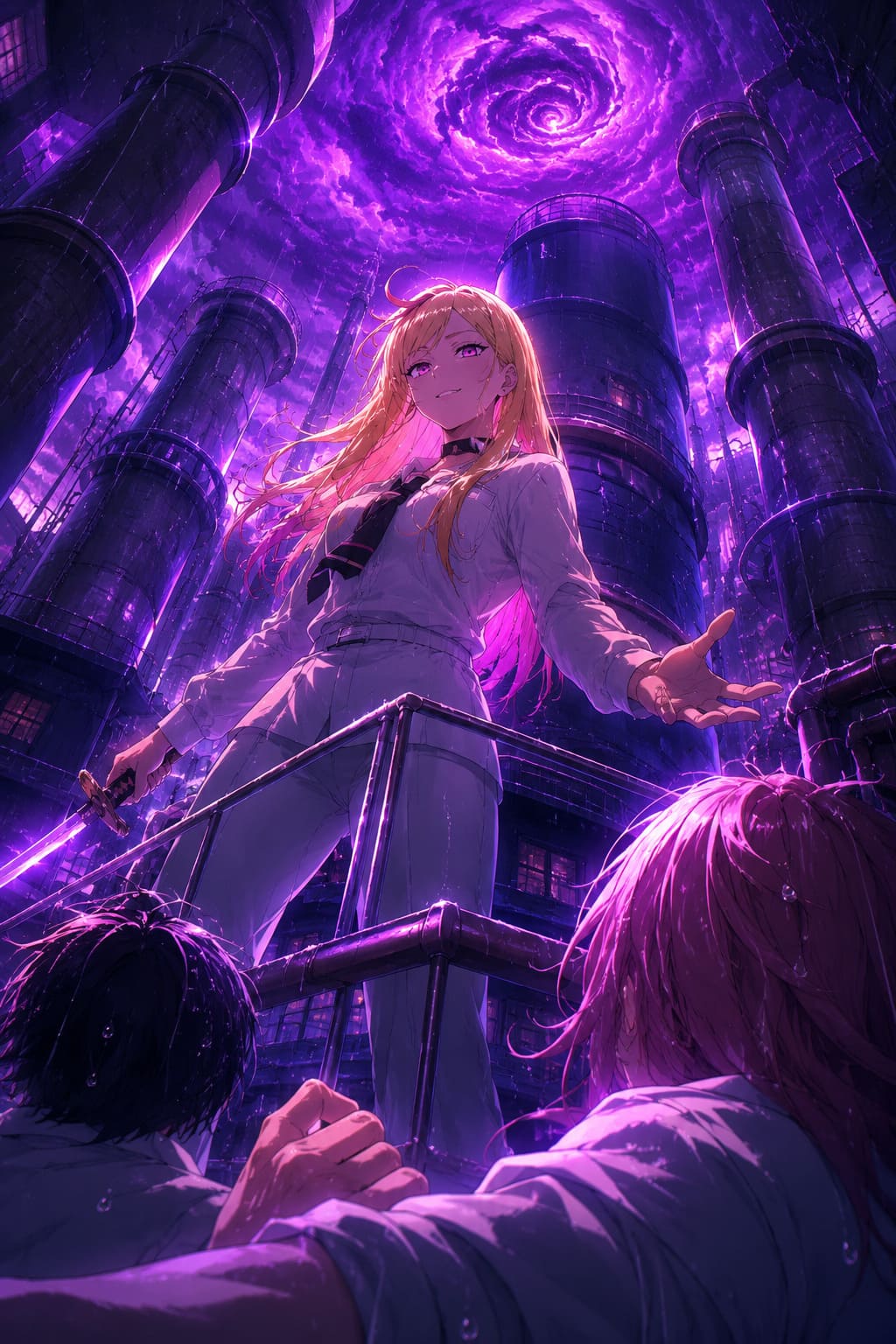
On Reddit and anime forums, discussions focused on how well the anime balances its tone. Some viewers compared it to a mix of classic assassin narratives and school comedy series, highlighting its unusual but effective blend of genres.
Main Challenge: Adapting an Uneven Story Structure
Despite the strong start, Kill Blue still faces a major challenge. The original manga is known for its shifting narrative structure, moving between action-heavy arcs and more comedic or experimental storylines.
This creates adaptation challenges such as:
- Maintaining consistent pacing across different arcs
- Balancing action intensity with slice-of-life moments
- Preventing tonal confusion for new viewers
The success of the anime will depend heavily on how well the production team smooths out these transitions.
Final Thoughts: A Risk That Could Pay Off
Overall, Kill Blue feels like one of the most interesting anime experiments of 2026. It is not a safe adaptation, and it does not rely on a guaranteed formula. Instead, it depends on execution, direction, and balance.
Studio CUE may not be a big name yet, but this project gives them a chance to establish themselves in the industry. With strong creative leadership and a unique source material, the anime has real potential to become a breakout hit.
If the team continues to maintain its balance between action, comedy, and emotional storytelling, Kill Blue could easily become one of the standout Shonen adaptations of the year.