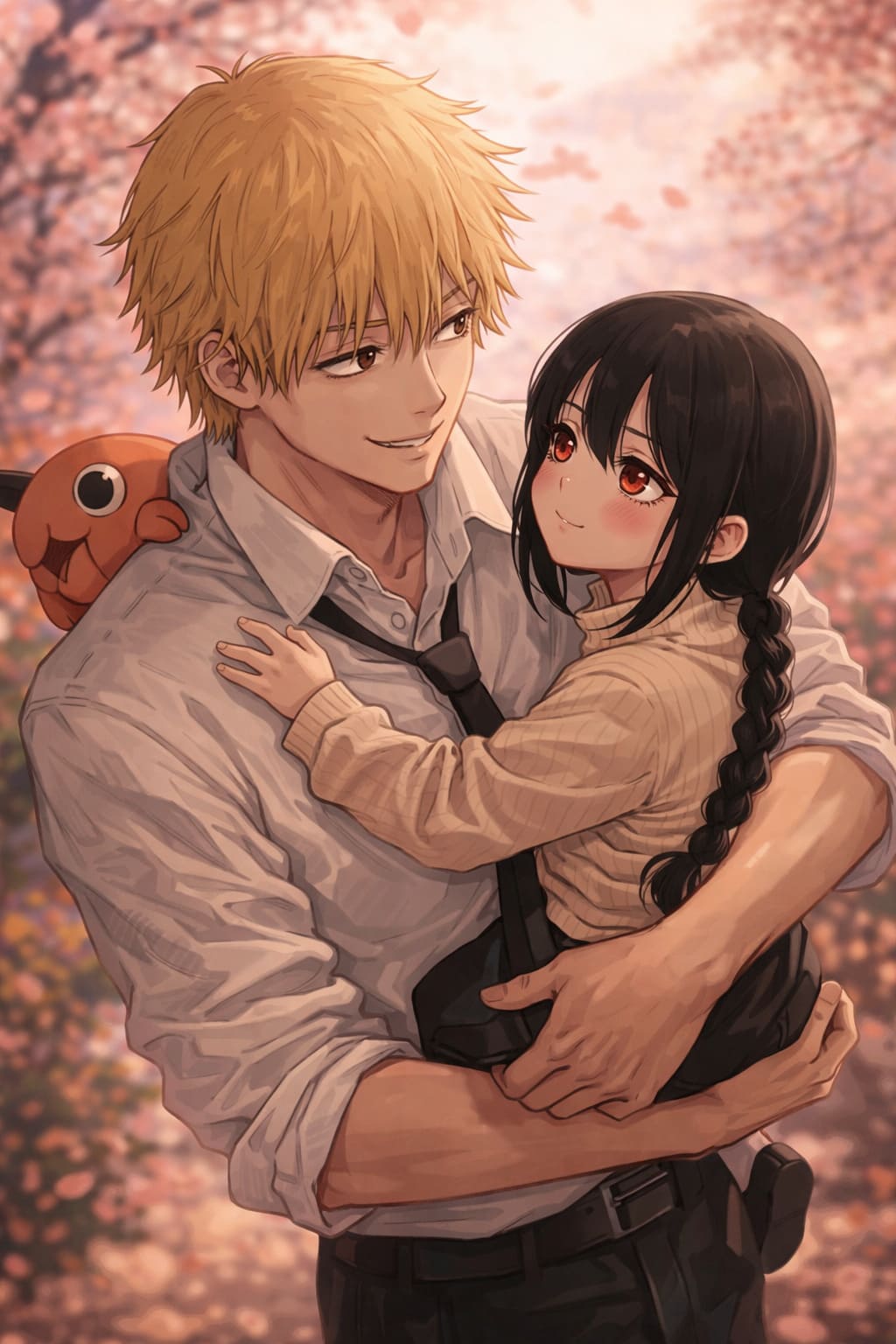
Denji as a father figure to Nayuta in Chainsaw Man
In Chainsaw Man Part 2, Tatsuki Fujimoto quietly shifts the story’s emotional center. It’s no longer just about blood, devils, or spectacle — it’s about a broke, traumatized teenager trying to raise a child who could literally end the world.
Denji and Nayuta’s relationship feels less like a plot device and more like a raw experiment in nature vs. nurture, played out in a tiny apartment with strict rules and way too much baggage.
As a fan, this is the dynamic that makes Part 2 hit harder than almost anything in Part 1.

From Pochita’s Wish to a Found Family
Nayuta doesn’t exist in Denji’s life by accident. She’s there because of Pochita’s final request after Makima’s defeat.
- The Control Devil wanted love, not worship or fear.
- Pochita’s instruction was painfully simple: “Give her lots of hugs.”
That line alone reframes the entire story. Denji isn’t just babysitting a reincarnated villain — he’s actively trying to break a cosmic cycle of abuse. Where Makima only understood control through domination, Denji offers something alien to devils: affection without conditions.
Denji’s Parenting: Messy, Earnest, Human
Denji doesn’t suddenly become a “good dad.” He becomes a trying dad — which is way more realistic.
His priorities make perfect sense when you remember where he came from:
- Food security — because hunger ruled his childhood
- Education — because ignorance kept him trapped
That’s why he’s obsessed with Nayuta going to college. To Denji, college isn’t just school — it’s proof that someone escaped the life he never chose.
Even the infamous house rules (Chapter 119) matter more than fans joke about:
- No opening the fridge
- No hookups in front of Nayuta
- No chaos crossing into her space
These aren’t punchlines. They’re Denji’s clumsy attempt at structure — something he never had, but desperately wants to give.
A Bratty Control Devil (And Why That’s a Good Sign)
Nayuta isn’t Makima 2.0. She’s sharp, possessive, petty, and weirdly funny — basically a kid with god-tier instincts and zero emotional filter.
Yes, she still shows traits of the Control Devil:
- She wants to own Denji
- She’s jealous and territorial
- She labels threats (like Asa) as “stinky”
But here’s the key difference: Denji doesn’t fear her.
Because he loves her, Nayuta can’t fully dominate him. Their bond runs on a warped but genuine mutual respect — something Makima never experienced. It’s proof that nurture is actively reshaping nature, even if the results are imperfect.
The Cost of Being a Single Father in a Devil World
Part 2 doesn’t romanticize Denji’s role. It punishes him for caring.
Public Safety and Yoshida understand one thing very clearly:
Nayuta is Denji’s weak spot.
- If Denji transforms, Nayuta dies
- If he disobeys, she becomes leverage
For someone who once lived only for cheap dreams and instant gratification, this is devastating. Denji giving up Chainsaw Man — the one identity that made him feel special — just to keep Nayuta safe is massive character growth.
He’s no longer surviving.
He’s protecting.
“Best Dad” Memes vs. The Dark Reality
Western fandom loves to joke about Denji being “Best Dad in Shonen,” and sure — the memes are funny. But underneath them is something unsettling.
- Is Denji projecting his trauma onto Nayuta?
- Is Nayuta the only reason he hasn’t collapsed?
- What happens if he fails, even once?
Every domestic scene carries tension because readers know the stakes. If Denji slips, the Control Devil doesn’t just relapse — the world ends.
Want to see more? Chainsaw Man Asa Mitaka’s childhood trauma and the Owl Devil

Why This Relationship Matters
At its core, Denji and Nayuta represent the heart of Chainsaw Man:
- Nature vs. Nurture — Love as a weapon against destiny
- Mutual Salvation — Nayuta gives Denji purpose, Denji gives Nayuta humanity
- Exploitation of Love — Institutions weaponize family bonds
- Quiet Growth — Becoming “good” without ever being pure
As the Death Devil prophecy creeps closer, one question hangs over every chapter:
Are Denji’s hugs really enough to stop the end of the world?
That uncertainty — intimate, terrifying, and deeply human — is why this might be Fujimoto’s most powerful relationship yet.