Scum of the Brave: Why the Yuusha no Kuzu Anime Feels Different from the Manga
When Yuusha no Kuzu (Scum of the Brave) moved from a web novel to a manga — and finally to a full TV anime in 2026 — it didn’t just change formats. It quietly changed its personality.

Both versions follow Yashiro, a cynical bounty hunter surviving in a Tokyo filled with demon transformations, illegal drugs,
and criminal deals. But anyone who has read the manga and then watched the anime knows one thing for sure: the story may be the same, but the feeling is not.
1. Visual Identity: Noir Ink vs Stylized Anime Energy
The difference is obvious from the very first glance.
- Manga (Nakashima723):
Gritty, heavy linework, sharp and tired faces, and a Tokyo that feels dirty and oppressive.
The art perfectly mirrors Yashiro’s internal cynicism and moral decay. - Anime (OLM Team Hikita):
Character designs inspired by toi8’s 2026 light novel illustrations.
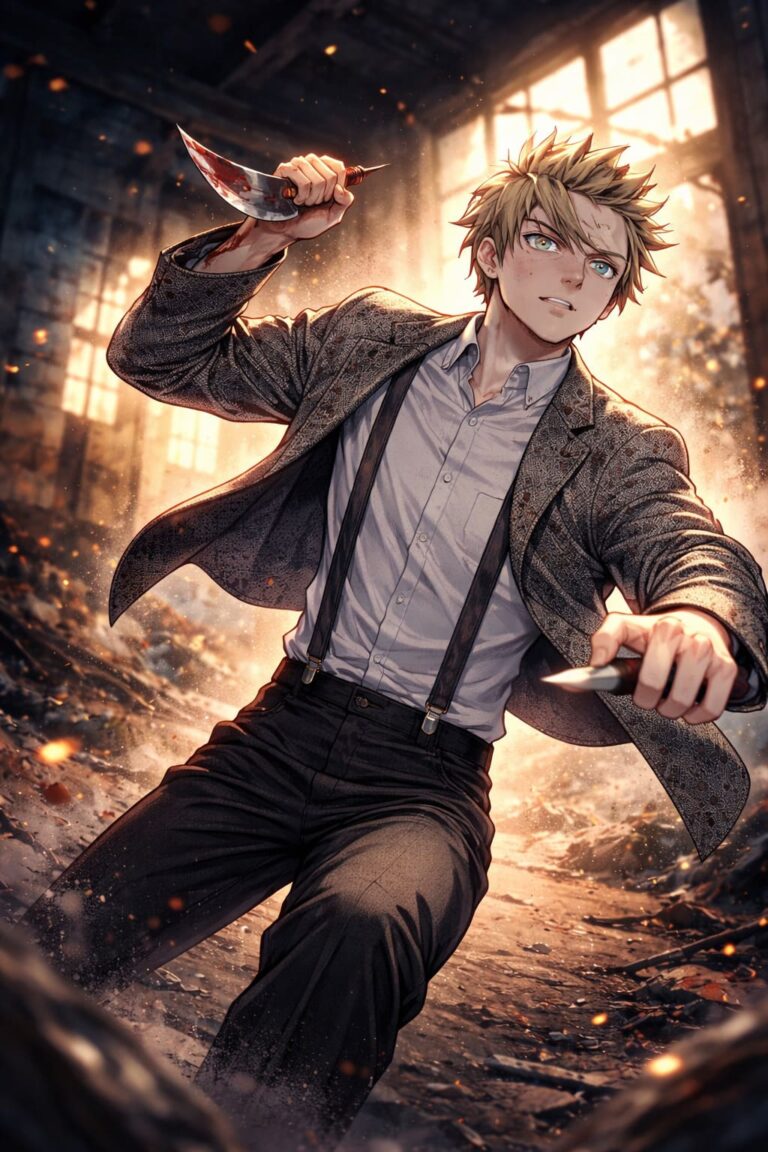
The style shifts depending on the scene — more cartoonish for comedy, cleaner and mature for serious moments.
The manga reads like a dark crime novel, while the anime feels more like a stylish urban fantasy with attitude.
2. Narrative Pacing: Slow Burn vs Character-Driven Momentum
With a two-cour structure (around 24 episodes), the anime had to reorganize the story.

- Manga pacing: slow, detailed, and introspective. It spends time explaining the E3 drug,
Demon King Transformation Surgery, and Yashiro’s inner thoughts. - Anime pacing: prioritizes relationships and dialogue early on.
The goal is to make the underworld feel lived-in, especially through characters like Salt Joe.
The manga explains how the world works. The anime shows how people survive inside it.
Discover more: (Hell’s Paradise Lord Tensen power rankings: Who is the strongest immortal?)
3. Action, Sound, and Tone
Action scenes highlight another key difference.
The manga relies on strong panel composition to keep fights tense and varied.
The anime, on the other hand, leans heavily on movement, sound design,
and Kenichiro Suehiro’s soundtrack to sell the bounty hunter atmosphere.
Some anime fights can feel repetitive — especially Yashiro’s use of explosive daggers —
but the emotional impact is often boosted by voice acting and music.
Humor also lands harder in the anime, especially the contrast between Yashiro’s exhausted cynicism
and the idealistic high school girls who follow him.
4. A Different Adaptation Philosophy
The anime is not a direct manga-only adaptation.
It also functions as a celebration of the “new edition” light novels.

That’s why the visual tone shifts away from the manga’s raw grit and closer to a more accessible,
stylized look. It’s not a replacement — it’s a parallel interpretation.
Discover more: (Tao vs Haki/Nen: Power system comparison Hell’s Paradise)
Quick Comparison
| Feature | Manga | Anime |
|---|---|---|
| Visual Style | Gritty, noir, heavy ink | Stylized, flexible, expressive |
| Focus | Yashiro’s inner cynicism | Yashiro as a flawed mentor |
| World-Building | Technical and detailed | Character-driven |
| Action | Static but clever | Energetic but repetitive |
| Atmosphere | Dark crime drama | Urban fantasy with bite |
Final Thoughts
If you enjoy slow, gritty introspection and heavy noir vibes, the manga is hard to beat.
If you prefer strong character chemistry, audio-driven mood, and emotional timing,
the anime brings its own unique strength.
Neither version replaces the other — they simply reveal different sides of the same broken hero.
And that fits Yuusha no Kuzu perfectly.