Why is Will Serfort Called the ‘Mageless Wonder’ in Wistoria: Wand and Sword? The Truth Behind His Hidden Power
If there’s one thing Wistoria: Wand and Sword does better than most modern fantasy anime, it’s turning a classic underdog story into something far more complicated. At first glance, Will Serfort looks like another powerless protagonist trying to survive in a world built against him. The academy mocks him, nobles underestimate him, and even teachers struggle to understand why he’s still there.
But the deeper you get into the manga and anime, the clearer it becomes: Will was never truly powerless.
That’s exactly why the nickname “Mageless Wonder” hits so hard.
For a long time, both the audience and the characters inside the story assume Will is defective — a boy born without the ability to use magic in a civilization where magic defines social status, education, and even human value. Yet somehow, he keeps doing impossible things. He defeats monsters elite students can’t handle. He survives dungeon floors that should kill him instantly. And eventually, he starts displaying powers that don’t fit the rules of the world at all.
As a fan, that’s the moment Wistoria stopped feeling like “just another magic school anime” for me.
The Entire World of Wistoria Is Built Around Magic
One of the smartest aspects of the series is how absolute the magic system feels.
In many fantasy anime, magic is important, but characters can still succeed through strategy, technology, or luck. In Wistoria, magic is basically civilization itself. The barrier protecting the sky, the political structure, the academy rankings — everything revolves around mana and spellcasting.
That’s why Will’s existence feels almost offensive to society.
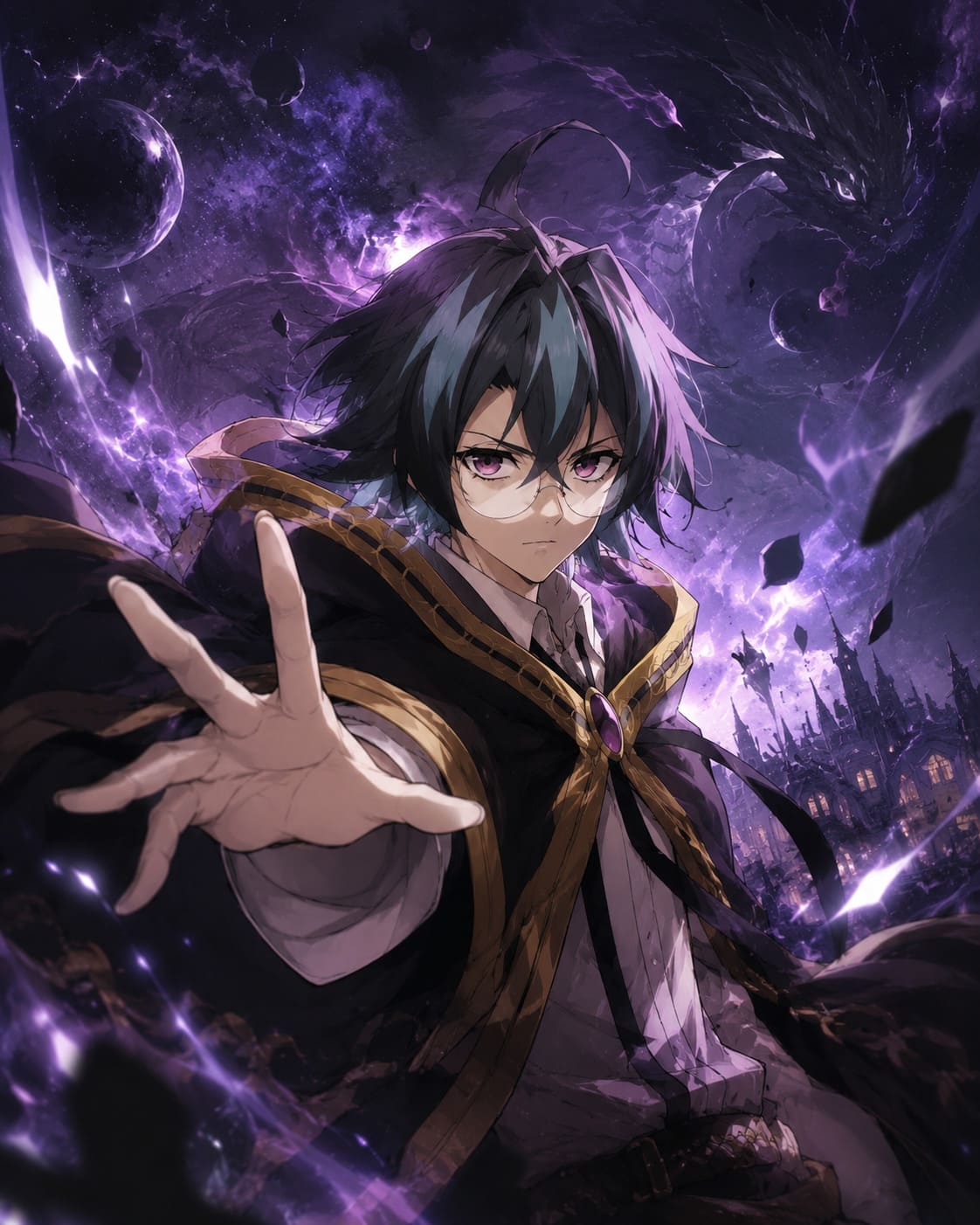
He can’t perform even the most basic magical tasks:
- activating magical tools
- casting beginner spells
- using standard wand techniques
- controlling mana externally
To most students at Regarden Magical Academy, Will looks like a complete fraud.
And honestly? Early on, even viewers start questioning how he managed to enter the academy in the first place.
Why “Mageless Wonder” Started as an Insult
The nickname wasn’t originally cool.
It was sarcasm.
Students called him the Mageless Wonder because it was “amazing” that someone so useless could still remain at such an elite institution. The title carried the same energy as calling someone “the world’s strongest weakling.”
But what makes the nickname interesting is how it slowly changes meaning over time.
The more people witness Will fight, the more uncomfortable they become. Because what initially looked pathetic starts becoming terrifying.
He doesn’t just compensate for lacking magic.
He breaks the logic of the world entirely.
By the time Will starts destroying high-level dungeon monsters with pure swordsmanship and abnormal physical ability, the “Wonder” part stops being mockery and starts becoming genuine fear and admiration.
That evolution is one of the best-written reputation shifts in recent fantasy manga.
The Biggest Twist: Will Actually Has Enormous Magical Power
This is where Wistoria separates itself from series like Mashle or Black Clover.
Will is not anti-magic.
He is not immune to magic.
And he isn’t simply compensating through muscles alone.
The truth is much stranger: Will’s body stores massive amounts of magic internally.
He has mana.
Too much of it, actually.
The problem is that he cannot release it through traditional methods like wands or spellcasting systems. Instead of flowing outward normally, his mana accumulates inside him like pressure trapped in a sealed container.
That revelation completely changes how you view the series retroactively.
Suddenly:
- his monstrous physical abilities make sense
- his abnormal durability becomes understandable
- his compatibility with magical energy stops feeling random
- his sword techniques gain an entirely new meaning
Will isn’t a failed mage.
He’s something the current magical system literally cannot categorize.
“Wis” Might Be the Coolest Power System in Modern Fantasy Anime
The introduction of Wis is probably the point where most manga readers became fully invested in Will as a protagonist.
Unlike standard elemental casting, Wis functions through absorption, conversion, and synchronization. Instead of throwing spells like a traditional mage, Will interacts with magic physically through his sword.
That concept alone already feels refreshing.
What Makes Wis Different?
| Ability | Description |
|---|---|
| Spell Absorption | Will can absorb magical attacks directly into his blade |
| Element Conversion | Stored magic changes the sword’s attributes |
| Prime Pathos | Emotional bonds amplify magical output |
| Limit Off | Full synchronization state that transforms Will completely |
The coolest part is that combat in Wistoria suddenly becomes far more dynamic because of this system.
A normal mage launches spells from distance.
Will closes the gap, intercepts magic mid-combat, and weaponizes it instantly.
Visually, it creates some of the most exciting fight choreography in the manga.
Elfaria’s Connection to Will Changes Everything
One detail I think many casual viewers underestimate is how important Elfaria is to understanding Will’s true nature.
At first, their relationship feels like a simple childhood promise story:
“We’ll reach the top together.”
But later arcs heavily imply their connection is tied directly to Will’s hidden power.
When Will channels Elfaria’s ice magic through Prime Pathos, the series practically confirms that emotional bonds themselves can function as magical catalysts. That idea adds surprising emotional depth to the combat system.
It’s not just power scaling.
It’s synchronization.
And honestly, that’s way more interesting than generic “friendship boosts” common in shonen anime.
Is Will Even Human?
This is where manga readers started going wild with theories online.
Recent revelations strongly suggest Will may not be an ordinary human at all. The story keeps hinting that he was either:
- artificially created
- part of an ancient prophecy
- connected to forgotten Sword factions
- designed as a countermeasure against celestial threats
The symbolism around “The Wand and The Sword” feels too deliberate to ignore now.
The world became obsessed with magic and abandoned the sword long ago. Will’s existence almost feels like history correcting itself.
Personally, I think that’s what makes him such a compelling protagonist compared to other modern fantasy leads.
He isn’t fighting the system simply because he’s an underdog.
He may literally represent the missing half of the world’s balance.
Why Fans Connect With Will So Much
A lot of anime protagonists are “special,” but Will earns his moments differently.
He suffers constantly.
Even after proving himself repeatedly, society still refuses to fully accept him because he doesn’t fit traditional expectations. That frustration feels weirdly realistic despite the fantasy setting.
And unlike many overpowered protagonists, Will’s victories usually come at brutal physical and emotional cost.
That makes his growth satisfying instead of effortless.
You genuinely feel every inch of progress.
Final Thoughts
The title “Mageless Wonder” perfectly captures the tragedy and brilliance of Will Serfort’s character.
People called him magicless because they misunderstood him.
The truth is far more dangerous: Will may possess a form of power greater than conventional magic itself.
That’s why Wistoria: Wand and Sword has become one of the most interesting fantasy series in recent years. Beneath the academy setting and flashy battles, the story is really about a world trapped by its own rigid definitions of strength.
And Will is living proof those definitions were wrong from the very beginning.