Senku’s Time Machine Theory Explained: The Mind-Bending Science Behind Dr. Stone’s Ending
Dr. Stone has always been a celebration of human ingenuity and the power of science. From recreating soap to launching rockets, Senku Ishigami’s journey has been a masterclass in turning the impossible into reality. But the ending? It pushed the series into uncharted territory—a time machine. And honestly, as a fan who’s been rooting for Senku since day one, I have to say—it’s brilliant, audacious, and perfectly Senku. Let’s break down how Senku’s “time travel project” actually works, why it’s more science than magic, and why it fits the spirit of Dr. Stone.
The Mission: Saving Those Who Were Lost
Senku isn’t just about invention for the sake of flexing science; he has heart. For 3,700 years, humanity lay frozen, but some statues were destroyed by tectonic activity, erosion, and ocean depths.
Here’s the kicker: Senku’s goal isn’t personal glory—it’s about giving everyone a second chance. By sending a message or a Medusa device back in time, he hopes to either prevent the petrification entirely or reduce its catastrophic effects.
In classic Senku fashion, humanity comes first, even if the plan is mind-bendingly complex.
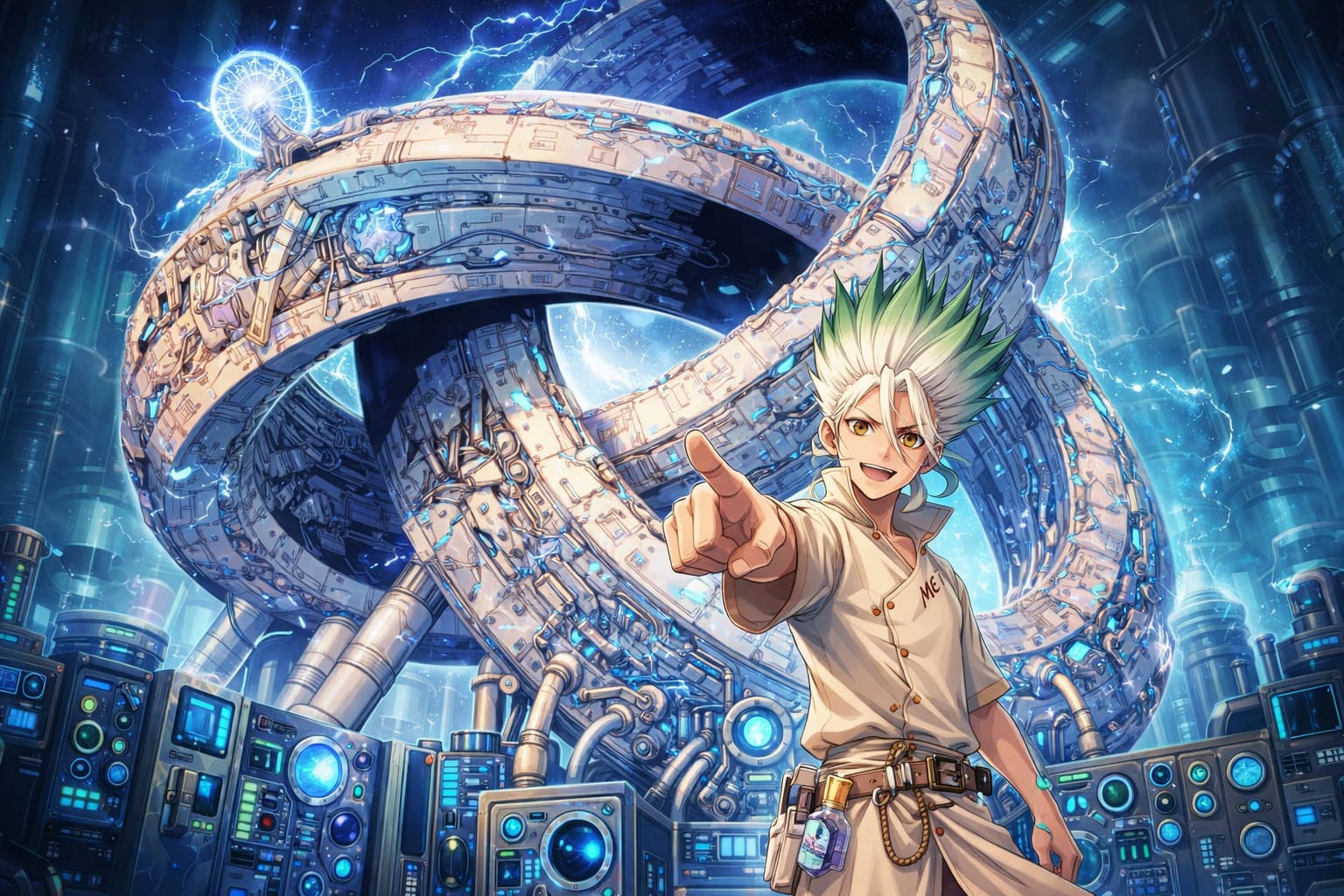
The Mechanics: How Senku Approaches the Impossible
What makes this theory so fan-exciting is that it’s all grounded in science, at least conceptually. Senku isn’t waving a magic wand—he’s building a 4D physics project. Here’s how it breaks down:
- Why-Man / Medusa AI as the Core Processor
The Why-Man, a mysterious alien AI, was originally the orchestrator of humanity’s petrification. By allying with one remaining Medusa, Senku gains access to computational power far beyond human tech—essentially using alien hardware to calculate the impossible. - Sending Data, Not Humans
Forget physically hopping through time; Senku’s theory sends information—quantum states, messages, or Medusa signals—back to the 21st century. This approach is more plausible than transporting flesh-and-bone humans, considering the energy demands. - Branching Timelines: Avoiding the Paradox
Fans have debated endlessly, but Dr. Stone leans on the multiverse approach. By sending a signal back, a parallel timeline emerges where the petrification never occurs, while Senku’s original Stone World timeline continues. This way, science avoids the classic “grandfather paradox” headache.
Why-Man: From Villain to Scientific Ally
The story twist is that the Why-Man didn’t petrify humanity out of malice; it genuinely believed immortality was a gift. Defeating the Why-Man through logic rather than brute force, Senku repurposes a Medusa unit as a time machine engine, bridging human ingenuity with futuristic alien physics.
This clever move reinforces a recurring theme in Dr. Stone: science is collaborative, whether across centuries or species.
The Seven Deadly Sins: Four Knights of the Apocalypse Chapter 230 Release date
Real Science or Anime Magic?
Of course, we have to be honest—time travel isn’t real yet. But Dr. Stone handles it carefully:
- Quantum Information: Sending data through time is a topic in theoretical physics, though currently impossible.
- Energy Requirements: Senku acknowledges the astronomical power needed, which justifies turning this into a multi-generational global project.
In short, it’s not about instant solutions—it’s about human persistence and the audacity to aim for the impossible.
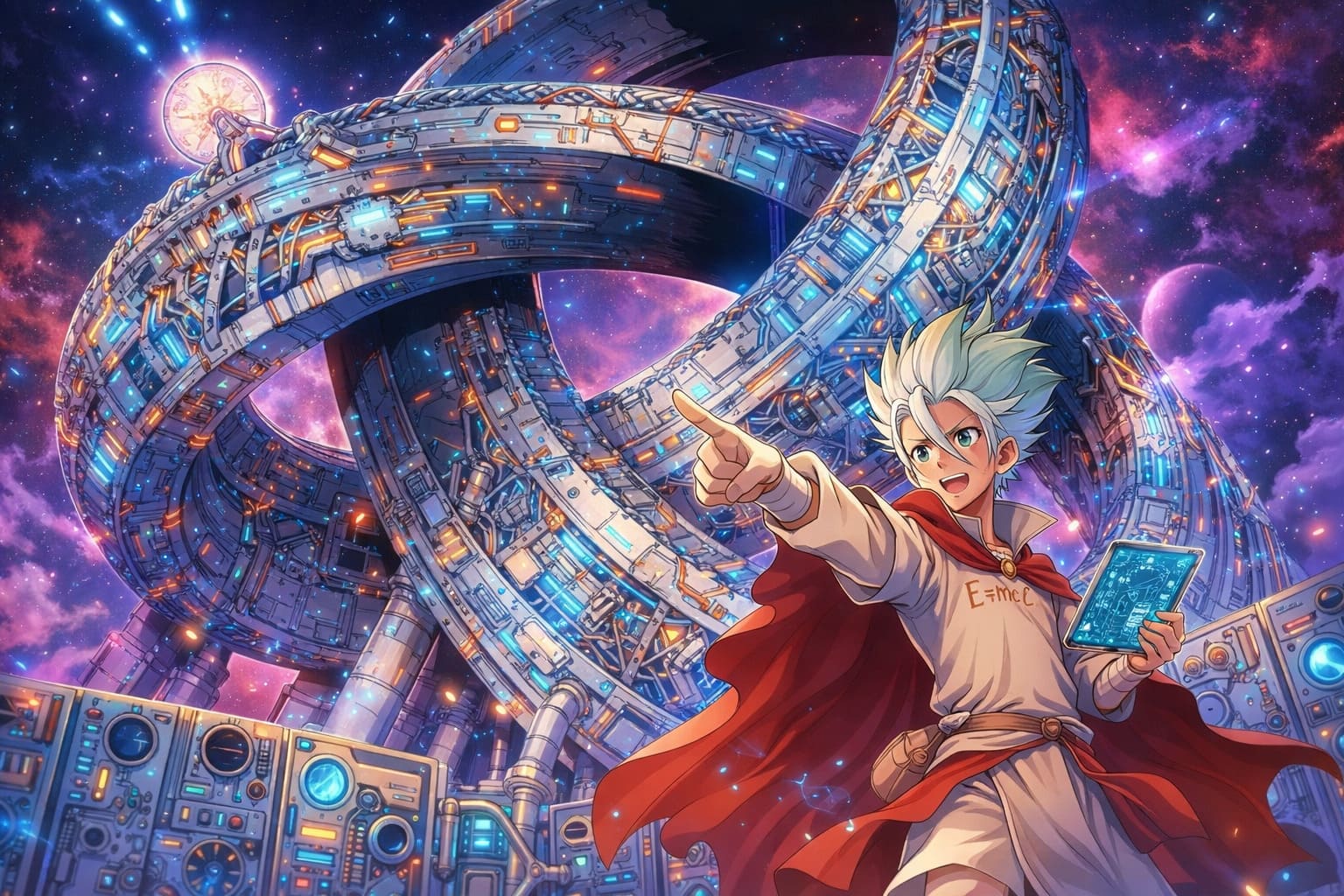
Why This Ending Works for Fans
Some might be skeptical about time travel in a series known for meticulous science. But as someone who’s obsessed with every stone and formula in Dr. Stone, I see why it fits:
- Infinite Scientific Frontiers: Even after rebuilding the modern world, there’s still a horizon to chase.
- Ultimate “Get Excited” Moment: For a genius like Senku, nothing less than building a time machine matches his level of ambition.
- The Heart of the Series: It reminds us that science isn’t about shortcuts—it’s about vision, patience, and creative problem-solving.
Dr. STONE Moon Mission Arc Summary: The Ultimate Leap from Stone to Space
Summary: Senku’s Time Machine Blueprint
| Component | Function |
|---|---|
| Hardware | Medusa (Why-Man) AI units |
| Payload | Quantum data/messages |
| Target | 21st Century (pre-petrification) |
| Physics Model | Branching World-lines (Parallel Timelines) |
In the end, Senku isn’t crafting a magical device. He’s launching humanity into a long-term scientific odyssey, proving that even time itself is just another frontier to be understood, measured, and eventually conquered.