Tomb Raider King Anime Review: Is This Action-Fantasy Worth Watching?
There are a lot of anime these days built around overpowered protagonists, regression, mysterious powers, and characters who somehow know exactly what is going to happen next. So when I started Tomb Raider King, I honestly expected another series that would feel familiar after three or four episodes. Instead, I found myself getting much more invested than I expected.
The Tomb Raider King anime takes the familiar regression-fantasy formula and throws it into a world of ancient tombs, supernatural relics, corporate power struggles, and a protagonist who is absolutely not interested in being a traditional hero. Jooheon isn’t here to save everyone. He’s here to get revenge, take everything he can, and make sure the people who betrayed him regret ever crossing his path.
After watching the first season, my overall feeling is pretty simple: Tomb Raider King is ridiculously entertaining. It isn’t perfect, and I don’t think it is trying to be some groundbreaking philosophical masterpiece. But as a fast-moving action-fantasy anime with a ruthless protagonist and a surprisingly fun relic system, it works extremely well.
A Revenge Story That Gets Moving Immediately
The setup is one of the strongest parts of the series. Mysterious tombs begin appearing around the world, and inside them are relics connected to gods, legendary figures, myths, and historical personalities. These aren’t ordinary magical items either. Many of them have their own personalities, desires, memories, and very strong opinions about the humans trying to control them.
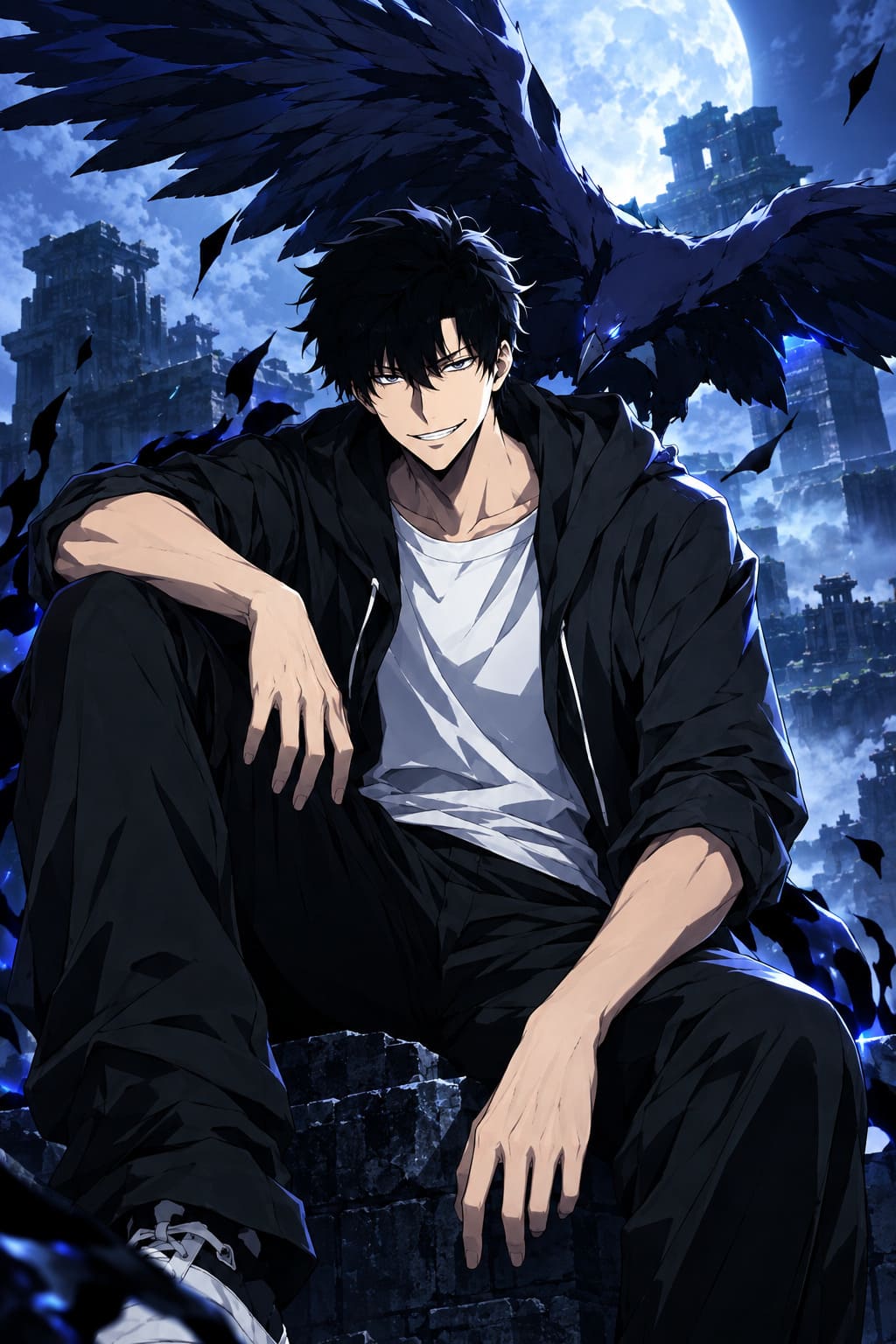
Jooheon Suh is already an experienced tomb raider when the story begins. He has spent years risking his life retrieving relics for powerful people, only to discover that loyalty means absolutely nothing when his employer decides he has outlived his usefulness.
His betrayal and apparent death could have been the end of his story. Instead, Jooheon gets thrown fifteen years into the past.
This is where things become fun.
He remembers where the tombs will appear. He knows which relics are dangerous. He understands how powerful organizations will develop. Most importantly, he knows exactly who is going to betray him.
Rather than using this second chance to become a nicer person, Jooheon basically decides to become everyone’s worst nightmare.
And honestly? I loved that choice.
Watching a protagonist exploit information from the future instead of spending half the season training to become stronger gives Tomb Raider King a fantastic sense of momentum. Jooheon usually has a plan, and even when that plan goes wrong, it is entertaining to see him improvise.
Jooheon Is the Reason the Anime Works
If you have watched enough modern action anime, you have probably seen your fair share of protagonists who are technically overpowered but still spend most of their time pretending to be humble. Jooheon doesn’t really bother with that.
He’s arrogant. He’s greedy. He’s manipulative. He can be downright unpleasant when he needs to be.
But that is exactly what makes him so much fun.
Jooheon understands the world he is living in better than almost everyone around him, and he isn’t afraid to take advantage of that. He will manipulate enemies, deceive relics, exploit rival organizations, and use his knowledge of the future to completely ruin someone’s carefully prepared plan.
There is something incredibly satisfying about watching a character who already knows the rules of the game decide to cheat anyway.
The Japanese voice performance also helps enormously. Yoshimasa Hosoya gives Jooheon a voice that can switch from cold and threatening to sarcastic and almost playful without feeling forced. His delivery makes the protagonist’s internal thoughts particularly enjoyable, especially when Jooheon is clearly ten steps ahead of everyone else in the room.
The Relic System Is Surprisingly Good
The relics are probably my favorite part of the Tomb Raider King world-building. At first, I expected them to function like another collection of magical weapons that simply give the protagonist increasingly ridiculous powers. Thankfully, the series does something more interesting.
The relics have personalities.
That changes everything.
A powerful artifact isn’t automatically obedient just because its owner is strong. Some relics have enormous egos, strange motivations, historical grudges, or supernatural conditions that make them difficult to control. Jooheon therefore has to understand what makes a relic tick instead of simply overpowering it.
This creates some genuinely entertaining situations. Jooheon can use historical knowledge, psychological manipulation, intimidation, or pure trickery to get what he wants.
The concept of Relic Backlash also gives the system some much-needed consequences. Trying to control something far more powerful than yourself can result in physical or psychological punishment, meaning there is at least some risk attached to collecting increasingly powerful relics.
It also makes the tombs feel more interesting than standard fantasy dungeons. You’re not simply walking into a room, defeating a monster, grabbing a treasure chest, and leaving. There is usually some additional problem waiting to ruin Jooheon’s day.
Animation: Impressive When It Matters, Uneven Elsewhere
This is probably where I have the biggest mixed feelings about the anime.
When Tomb Raider King wants to look spectacular, it absolutely can. The relic powers, major battles, supernatural effects, and large-scale tomb sequences can look fantastic. There are plenty of moments where the combination of glowing effects, aggressive camera movement, and fast choreography gives the show exactly the kind of energy I want from an action-fantasy anime.
But the production isn’t consistently at that level.
Some quieter scenes use noticeably simpler character models, and certain backgrounds don’t have the same impressive detail you might expect if you’ve seen the original manhwa. Considering how visually polished REDICE Studio’s artwork can be, comparisons are inevitable.
That said, I don’t think the anime collapses under those limitations. The important thing is that the biggest battles generally receive the attention they need. When the story reaches a major confrontation, the production usually remembers that this is supposed to be a spectacle.
For me, that is enough to keep the animation on the positive side of the ledger, even if it isn’t consistently outstanding.
The Supporting Cast Keeps Things From Getting Too Dark
Jooheon could easily become exhausting if the entire cast simply stood around reacting to his schemes. Fortunately, the supporting characters give the anime some much-needed personality.
His relationship with the people around him gradually becomes one of the better aspects of the story. Jooheon initially treats relationships in a very practical way, but shared danger and repeated battles create a surprisingly entertaining team dynamic.
There is also plenty of humor scattered throughout the darker revenge plot. The show understands that watching Jooheon manipulate everyone for twelve straight episodes could become monotonous, so it regularly allows the supporting cast to create moments of chaos and comedy.
| Element | My Take |
|---|---|
| Story | Fast, addictive, and built around satisfying revenge |
| Main Character | One of the strongest reasons to keep watching |
| World-Building | Creative relic mechanics add real personality |
| Animation | Strong during major action, inconsistent elsewhere |
| Pacing | Very fast, sometimes almost too fast |
| Comedy | Well placed and prevents the story from becoming too grim |
The Biggest Problem: The Anime Moves Almost Too Fast
One of my main criticisms is also one of the show’s biggest strengths.
Tomb Raider King moves.
There isn’t much wasted time. The betrayal happens, the regression happens, Jooheon begins exploiting his knowledge, and suddenly we’re already dealing with major relics and increasingly dangerous opponents.
For someone who hates slow training arcs, this is fantastic.
For someone who enjoys watching side characters develop gradually and minor storylines receive plenty of attention, it may feel rushed.
The twelve-episode format means some material inevitably gets compressed. Certain secondary characters don’t receive as much development as they could, while parts of the world-building are explained quickly rather than explored naturally.
I personally prefer the aggressive pacing, but I can understand why some manhwa readers might wish the adaptation had slowed down occasionally.
Is Tomb Raider King Similar to Solo Leveling?
Yes, there are obvious similarities, and fans of Solo Leveling will probably be among the easiest audiences to recommend this anime to. Both series feature stylish supernatural combat, powerful characters, progression, dramatic abilities, and a Korean manhwa origin.
However, the appeal is different.
Solo Leveling is heavily focused on power progression and watching Sung Jinwoo evolve into an increasingly dominant force. Tomb Raider King puts considerably more emphasis on information, manipulation, relic collecting, and exploiting future knowledge.
Jooheon doesn’t always win because he has the biggest attack. Quite often, he wins because he already understands what his opponent is about to do.
That distinction gives Tomb Raider King its own identity.
Where to Read Tomb Raider King Manhwa After Season 1: Complete Guide
What I Liked Most
- Jooheon’s personality — he’s selfish, clever, ruthless, and extremely entertaining.
- The relic concept — sentient artifacts make the world feel different from standard dungeon fantasy.
- The pacing — the story rarely feels like it’s standing still.
- The revenge angle — seeing Jooheon systematically dismantle the people who ruined his previous life is extremely satisfying.
- The humor — the comedy helps balance the darker elements of the story.
What Didn’t Work As Well
- Uneven animation — the difference between major battles and quieter scenes can be noticeable.
- Rushed side stories — some characters and subplots deserved more breathing room.
- Familiar tropes — regression and an overpowered protagonist are hardly new ideas in 2026.
Final Verdict: Should You Watch Tomb Raider King?
After finishing the first season, I would absolutely recommend Tomb Raider King to anyone who enjoys action-fantasy anime with a morally questionable protagonist.
It’s not perfect. The animation can be inconsistent, the story occasionally moves faster than it should, and the basic regression premise won’t feel particularly fresh to anyone who has spent years watching modern Korean webtoon adaptations.
But here’s the thing: freshness isn’t always the same as entertainment.
Tomb Raider King knows exactly what kind of show it wants to be. It wants to give you powerful relics, dangerous tombs, ridiculous schemes, revenge, dark humor, supernatural battles, and a protagonist who is always looking for the cheapest possible way to win.
And it delivers.
If you want a slow, character-heavy fantasy drama, this probably isn’t your next favorite anime. But if you’re looking for something you can sit down with and immediately get pulled into, Tomb Raider King is an easy recommendation.
For me, the biggest compliment I can give it is that I rarely found myself checking how many episodes were left. I just wanted to see what ridiculous thing Jooheon would do next.
My verdict: 8/10.
It’s a flawed adaptation, but an incredibly fun one. If the future seasons can maintain the momentum while giving the supporting cast and world-building a little more room to breathe, Tomb Raider King could become one of the more enjoyable Korean manhwa anime adaptations of its generation.