Why Did Kurumi Fukuga Start Forex Trading? The Tragic Backstory Behind FX Fighter Kurumi-chan
There is something strangely cruel about FX Fighter Kurumi-chan (FX Senshi Kurumi-chan). At first glance, it looks like the kind of anime where cute girls sit around staring at charts, talking about money, and occasionally celebrating a profitable trade. Then the story starts explaining why Kurumi Fukuga is trading Forex in the first place, and the whole premise becomes much darker.
That contrast is probably what grabbed me most about the series. The pastel character designs and almost playful atmosphere make Kurumi’s situation feel even more uncomfortable. She isn’t trading because she dreams of becoming rich. She isn’t chasing some glamorous financial lifestyle. She is trying to fix something that happened to her family when she was still a child.
And that is where Kurumi’s story really begins.
The Real Reason Kurumi Fukuga Started Forex Trading
Kurumi’s motivation is surprisingly simple on the surface: she wants to recover the 20 million yen her mother lost through Forex trading.
But emotionally, it is much more complicated than that.
When Kurumi was a middle school student, her mother, Kozue Fukuga, became involved in FX margin trading. What initially appears to have been an attempt to improve the family’s finances gradually turned into something much more destructive.
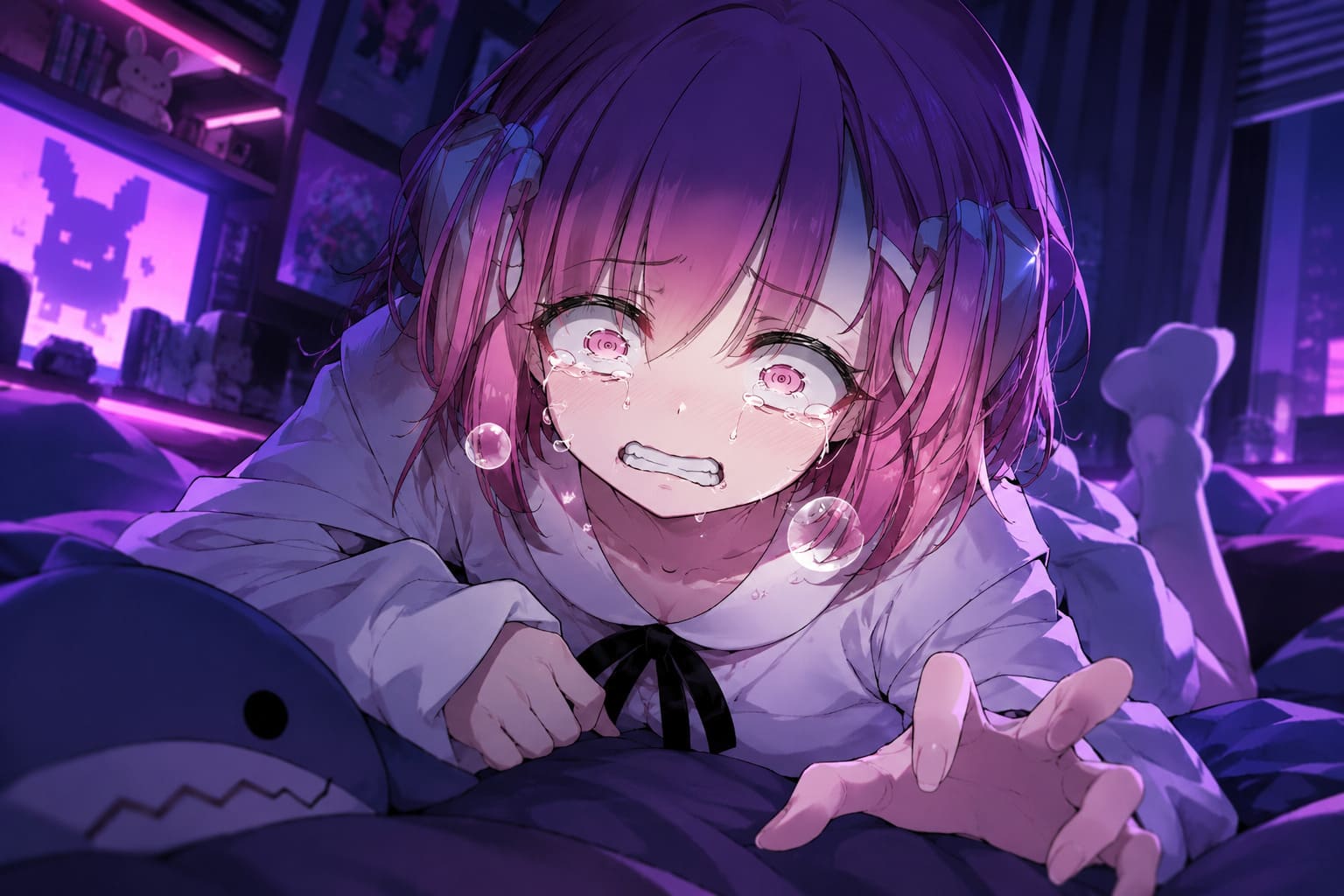
Kozue began trading secretly and used the family’s savings to support increasingly risky positions. Then came the financial disaster associated with the 2008 Lehman Shock.
The market volatility became catastrophic for traders caught on the wrong side of heavily leveraged positions. Kozue suffered enormous losses and, instead of being able to simply walk away, became trapped in the cycle of trying to recover what she had already lost.
According to the story’s backstory, the final damage reached approximately 20 million yen.
For a family, that is not just a number on a trading account. It represents years of savings, security and plans for the future.
The consequences were devastating. Overwhelmed by guilt and terrified of what her financial decisions had done to her family, Kozue ultimately took her own life.
Kurumi was left with something that money could not easily repair: grief mixed with a very specific sense of unfinished business.
Kurumi’s Emotional Equation
For Kurumi, the logic eventually becomes almost painfully straightforward:
- Her mother lost 20 million yen.
- Forex was responsible for the financial destruction.
- The money can theoretically be earned back.
- Therefore, Kurumi believes she can repair the damage by becoming successful at Forex.
Of course, life doesn’t work like that.
And neither does the Forex market.
Kurumi Isn’t Chasing Wealth — She’s Chasing the Past
This is the part of FX Fighter Kurumi-chan that I find considerably more interesting than the trading terminology itself.
Kurumi doesn’t really understand the difference between making money and repairing trauma.
She believes that if she can earn back the lost 20 million yen, something about the past will finally become right again. Her goal sounds financial, but the emotional objective is completely different.
She wants to prove that the money her mother lost can be recovered.
She wants to prove that her mother wasn’t simply doomed.
And, perhaps most importantly, she wants to believe that the tragedy doesn’t have to define her own life.
That makes Kurumi’s Forex journey feel less like an investment strategy and more like a personal confrontation with her mother’s ghost.
The irony is brutal.
The very market that destroyed her family is now the thing Kurumi believes can save it.
The Most Dangerous Thing About Kurumi’s Plan
Kurumi has already seen what excessive trading can do. She knows that Forex can destroy savings. She knows leverage can make losses grow incredibly quickly. She knows what happened to her mother.
Yet she still believes she can succeed.
That contradiction is central to her character.
Kurumi essentially tells herself that the difference between her and her mother is preparation. She can study charts. She can learn the terminology. She can watch the market carefully. She can avoid making the same mistakes.
There is some logic behind that thinking, but emotionally it is much more dangerous.
Kurumi isn’t approaching the market as a neutral participant.
She has a target.
She has a personal history attached to every yen.
And she has already decided what the money needs to accomplish emotionally.
That is an awful psychological position from which to trade.
Revenge Trading Becomes Part of Kurumi’s Story
One of the most fascinating ways to interpret Kurumi’s behavior is through the concept of revenge trading.
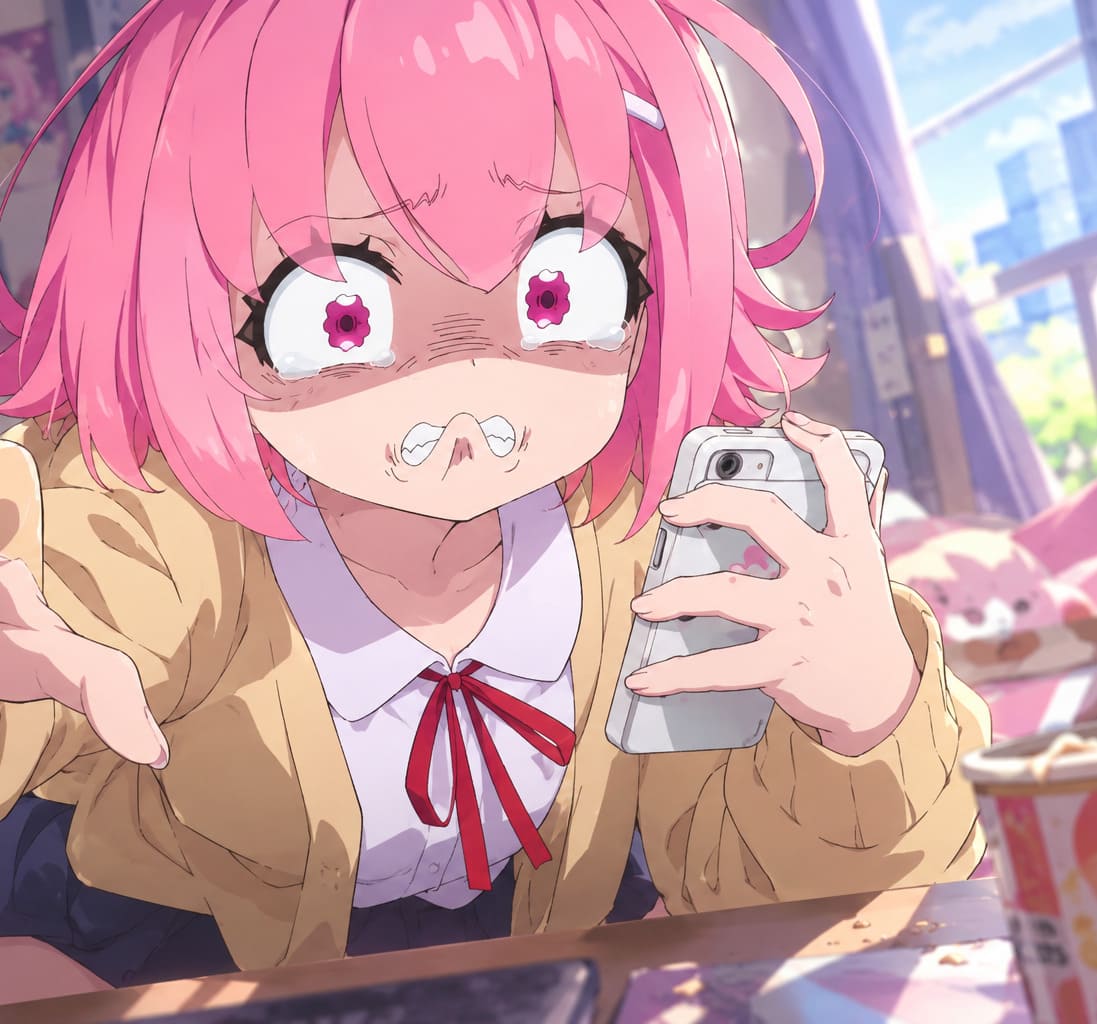
In ordinary trading psychology, revenge trading happens when someone suffers a loss and immediately tries to win the money back. Instead of accepting the loss and reassessing the situation, the trader increases risk because they desperately want to return to their previous financial position.
Kurumi takes that idea to an extreme.
Her “loss” happened years before she ever opened her own trading account.
She inherited it emotionally.
The 20 million yen becomes a number that follows her into adulthood.
That is why her story feels so uncomfortable. Kurumi isn’t simply trying to make a profit. She’s trying to make the past disappear.
The “Mrs. Watanabe” Connection Makes the Story More Interesting
There is also a broader Japanese financial context behind the series.
The term “Mrs. Watanabe” has historically been used in financial discussions to describe Japanese household investors, particularly housewives who became active in currency trading while managing family finances.
That cultural background gives Kozue’s story an additional layer.
She isn’t presented as some fantastical casino gambler living in an underground financial world. She is an ordinary person who gets pulled deeper and deeper into a very accessible financial product.
And that’s exactly why FX Fighter Kurumi-chan works so well as psychological drama.
Forex isn’t hidden.
You don’t need access to an illegal gambling organization. You don’t need to enter a secret casino. In the modern world, someone can download an app, deposit money and start trading remarkably quickly.
That accessibility makes Kurumi’s situation feel much closer to reality than the exaggerated gambling scenarios seen in anime such as Kaiji or Kakegurui.
Why Kurumi’s Backstory Works So Well
For me, the strongest part of Kurumi’s character isn’t even the fact that she trades Forex.
It’s why she can’t simply walk away from it.
Her friends and classmates can discuss trading as a skill, an opportunity, or even an exciting hobby. Kurumi carries something much heavier into every position.
Every successful trade can feel like proof that she is finally winning.
Every loss can feel like history repeating itself.
That changes the emotional meaning of something as simple as a red or green number on a screen.
A normal trader might think:
“I’m losing money.”
Kurumi’s psychology is closer to:
“I’m becoming like my mother.”
That distinction is enormous.
Cute Characters, Horrible Financial Reality
This is also where the series’ visual style deserves some credit.
The cute aesthetic initially makes the subject matter seem harmless. But the story repeatedly uses that contrast to make the financial danger more disturbing.
Kurumi, Mochiko Kogane, Mebuki Yamashi and Yasuko Takane can look like ordinary anime characters having ordinary conversations.
Then the charts turn against them.
Suddenly, concepts such as leverage, unrealized losses, stop-loss orders and margin requirements aren’t just financial vocabulary. They become sources of genuine tension.
That’s what separates FX Fighter Kurumi-chan from a simple “anime girls learn about investing” premise.
The numbers actually matter.
And when those numbers start moving in the wrong direction, there is nowhere for the characters to hide.
Kurumi’s Biggest Enemy Isn’t the Forex Market
It would be easy to describe the Forex market as the villain of Kurumi’s story.
But I don’t think that’s quite right.
The market doesn’t care about Kurumi.
It doesn’t know about Kozue.
It doesn’t know about the 20 million yen.
It doesn’t know that a young university student is trying to repair her family history.
Currencies move because of economic data, interest rates, central-bank decisions, geopolitical events, liquidity and countless other factors.
The market has no emotional relationship with Kurumi whatsoever.
That’s what makes her goal so tragic.
She approaches Forex as if she is fighting an opponent who took something from her.
But there is no opponent waiting for her.
There is only a system that keeps moving.
And no amount of determination can force that system to give her the ending she wants.
Hero Organization Chapter 71: Release Date, Full Chapter 70 Recap, and Major Fan Theories Explained
Final Thoughts on Kurumi Fukuga’s Forex Motivation
The reason Kurumi Fukuga started Forex trading is ultimately much sadder than simple greed.
She wants to recover the 20 million yen lost by her mother, but the money represents much more than money. It represents her childhood, her mother’s death, her family’s suffering and Kurumi’s desire to believe that the tragedy can somehow be corrected.
That’s why I think her backstory is the strongest hook in FX Fighter Kurumi-chan.
The series takes something that could easily have become a cute comedy about girls trading currencies and gives it a surprisingly painful emotional core.
Kurumi thinks she is entering Forex to make money.
In reality, she is entering the market because she is still trying to understand what happened to her family.
And that makes every trade considerably more frightening.
The most disturbing question isn’t whether Kurumi can eventually make 20 million yen.
It’s whether, in trying to recover what her mother lost, she is slowly becoming trapped in the exact same cycle that destroyed her.