Is FX Fighter Kurumi-chan Worth Watching for Crypto Traders? Deep Dive Analysis
There are plenty of movies and TV shows about money. There are far fewer that understand what it feels like to sit alone in front of a chart while a position quietly turns against you.
That is where FX Fighter Kurumi-chan (FX Senshi Kurumi-chan) gets surprisingly interesting.
At first glance, it looks almost deliberately misleading. Cute character designs, university students, everyday conversations and the familiar visual language of a slice-of-life anime make it seem like something light and harmless. Then the trading starts.
And suddenly you’re watching characters argue about leverage, floating losses, stop-loss decisions and margin calls while their emotional state slowly falls apart.
As someone who has spent a fair amount of time around anime communities and financial-market discussions, I think that’s exactly what makes FX Fighter Kurumi-chan so unusual. It doesn’t treat trading as a glamorous shortcut to wealth. It treats it as something that can become psychologically brutal when money, ego and desperation get mixed together.
For crypto traders, that makes the series considerably more relevant than its Forex-focused premise might suggest.
The First Surprise: This Isn’t Really an Anime About Forex
Technically, Kurumi’s world is centered on foreign exchange trading. The terminology, currency pairs and Japanese retail Forex environment are different from what you might encounter trading Bitcoin perpetuals or altcoin futures.
But the emotional mechanics are almost immediately recognizable.

The market doesn’t care whether you’re trading USD/JPY or BTC/USDT. A leveraged position doesn’t become safer because you have a convincing reason for opening it. A losing trade doesn’t suddenly become a good trade because you’ve already spent hours researching it.
That’s the uncomfortable idea sitting underneath FX Fighter Kurumi-chan.
The anime isn’t really asking whether Kurumi can predict the market.
It’s asking what happens to a person when they desperately need the market to go their way.
And that’s a much more interesting question.
| Forex in Kurumi-chan | Crypto Trading Equivalent |
|---|---|
| Margin trading | Futures and perpetual contracts |
| Floating losses | Unrealized P&L |
| Leverage | 20x, 50x, 100x+ positions |
| Stop-loss decisions | Liquidation and risk management |
| Currency volatility | Crypto’s extreme price swings |
| Technical analysis | Candlesticks, indicators and support/resistance |
| Margin call | Forced liquidation |
Kurumi’s Backstory Makes the Trading Hit Harder
Kurumi Fukuga isn’t introduced as some brilliant financial prodigy who discovers trading and immediately starts printing money.
Her relationship with Forex is much darker.
Her mother previously lost the family’s savings through leveraged trading, suffering a catastrophic financial loss after the global crisis surrounding the collapse of Lehman Brothers. Kurumi grows up carrying the consequences of that event and eventually decides to enter the same market herself.
Her motivation is almost painfully understandable: she wants to recover what was lost.
That is also where the story becomes psychologically interesting.
From a purely rational perspective, trying to win back money lost by someone else makes little sense. But people don’t make financial decisions in a vacuum. Grief, guilt, anger and the desire to repair the past can be incredibly powerful forces.
Kurumi isn’t simply trading.
She’s trying to rewrite her family’s history through a trading account.
That’s a terrible reason to trade, and the series knows it.
Why Crypto Traders Will Recognize Themselves
The biggest strength of FX Fighter Kurumi-chan isn’t its explanation of financial terminology. It’s the way it depicts the mental traps surrounding speculation.
Anyone who has watched a leveraged crypto position move rapidly in the wrong direction will recognize some of these situations immediately.
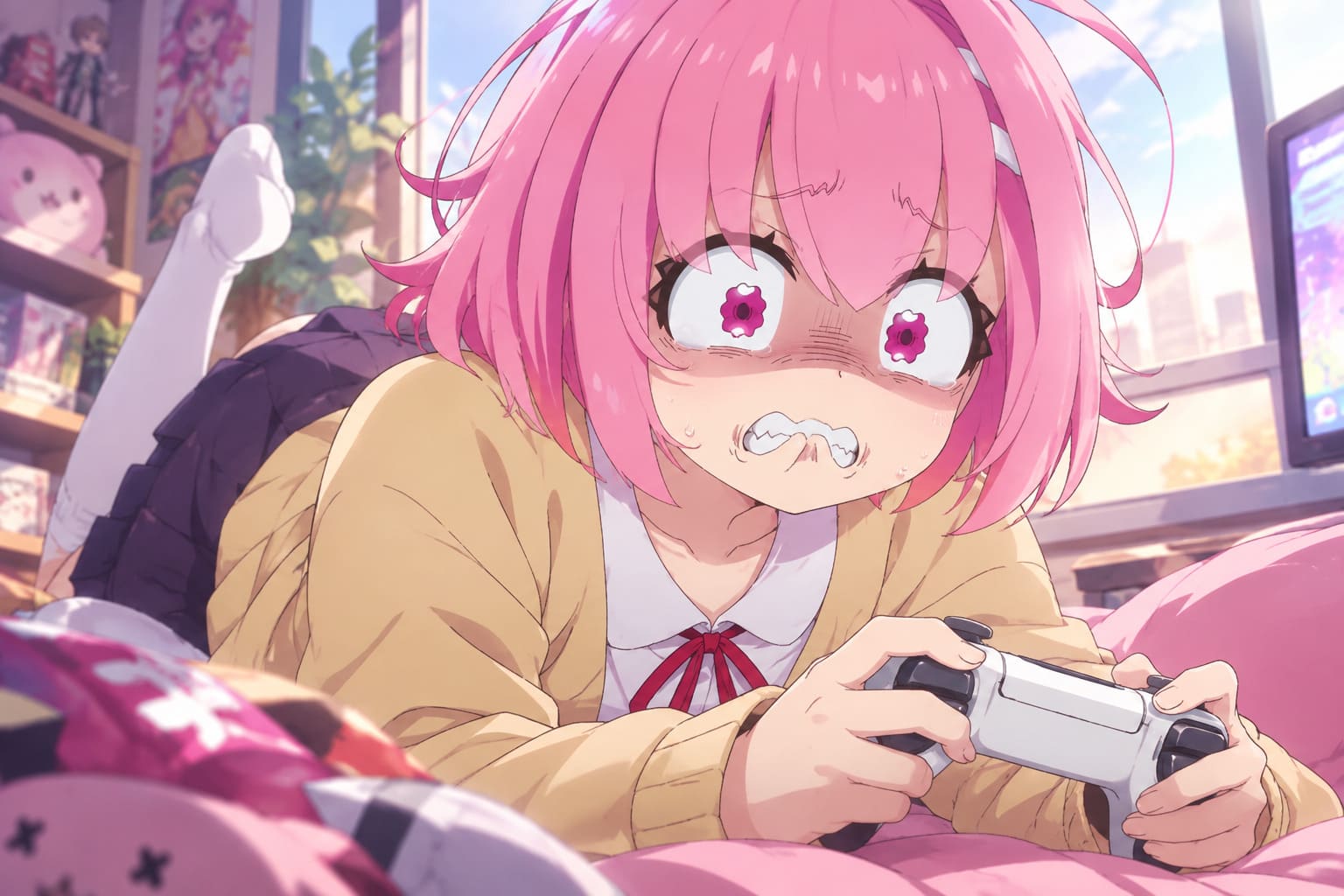
1. Leverage Changes Everything
Leverage is probably the easiest connection to make between Forex and crypto.
A small market movement can become a huge percentage change in your account when the position is heavily leveraged. That can create a strange psychological distortion: the trader stops thinking about the underlying asset and starts thinking exclusively about the liquidation price.
I’ve always found this one of the most dangerous aspects of leveraged trading, and Kurumi-chan understands the feeling surprisingly well.
You aren’t just watching a chart anymore.
You’re watching a number that could determine whether you sleep tonight.
2. The “It Has to Come Back” Mentality
This is where the show becomes less about finance and more about human behavior.
A losing position can create an almost irrational attachment. The longer it remains open, the harder it becomes to admit that the original idea was wrong.
Then comes the dangerous thought:
“I’ll just wait for it to recover.”
Sometimes it does.
Sometimes it doesn’t.
And when the trader has leverage involved, waiting isn’t necessarily neutral. The position continues consuming margin while the liquidation threshold gets closer.
That emotional spiral is something crypto traders know extremely well.
3. Revenge Trading Is the Real Villain
One bad trade can become two.
Two can become five.
Then suddenly the trader isn’t making decisions based on a strategy anymore. They’re trying to erase a number on the screen.
That’s revenge trading, and Kurumi’s story repeatedly explores how quickly losses can affect decision-making.
The temptation is obvious: if you lost $500, why not make a $1,000 trade and get it back?
The problem is that the second trade is no longer about market opportunity. It’s about emotional recovery.
That’s gambling psychology wearing a trading interface.
The 3 AM Problem Is Even More Relevant to Crypto
This might be one of the details that feels even more relevant to crypto than traditional Forex.
Crypto doesn’t close.
There is no Friday evening moment when you can tell yourself that the market is going to shut down for the weekend. Bitcoin can move while you’re sleeping. An altcoin can collapse while you’re having dinner. A position can be liquidated while your phone is sitting on the other side of the room.
FX Fighter Kurumi-chan captures the strange relationship traders develop with screens.
You check once.
Then again.
Then five minutes later.
Then you tell yourself you’re only going to look at the price before bed.
Suddenly it’s 3:00 AM.
The anime’s exaggerated visual style actually makes this psychological reality more effective. The characters may be cute, but the situations they’re trapped in can feel genuinely uncomfortable.
That’s the joke.
And also the horror.
Technical Analysis Doesn’t Save Anyone
Another thing I appreciated about the series is its treatment of technical analysis.
Charts can make trading feel scientific. You draw support and resistance, add moving averages, identify patterns and suddenly the market appears understandable.
But a chart doesn’t guarantee anything.
An indicator can describe what happened. It cannot promise what happens next.
That’s particularly important in crypto, where sudden news, liquidity changes, large orders and extreme volatility can completely invalidate a beautiful-looking setup.
The anime doesn’t necessarily argue that technical analysis is useless. Instead, it exposes something more subtle:
technical knowledge can create confidence that exceeds the quality of your actual prediction.
That’s a much more interesting criticism.
The Social-Media Trading Problem
Modern crypto trading has another layer that makes Kurumi-chan feel surprisingly current: social pressure.
Crypto communities are filled with screenshots of enormous profits.
Someone turns $500 into $20,000.
Someone else catches the next 100x token.
Another trader posts a perfect entry after the move has already happened.
Then you look at your own portfolio.
Suddenly your perfectly reasonable 3% gain feels pathetic.
That is where FOMO becomes dangerous.
The series’ characters experience similar pressure from people around them. Watching somebody else make money can be enough to convince you that you’re missing something.
I’ve seen this dynamic discussed endlessly in trading communities, and it’s one of the reasons I think the anime works better as a psychological story than as a literal trading tutorial.
It understands that sometimes the biggest trading mistake isn’t misunderstanding the chart.
It’s comparing your results to somebody else’s highlight reel.
What I Think the Anime Gets Right
If I had to reduce the appeal of FX Fighter Kurumi-chan to a few points, I’d put it like this:
- Trading is presented as psychologically exhausting rather than glamorous.
- Leverage is treated as a source of danger, not a magical profit multiplier.
- Losses affect characters emotionally, not just financially.
- FOMO and revenge trading feel like genuine behavioral problems.
- The cute aesthetic creates an intentionally strange contrast with the subject matter.
That last point is especially important.
A darker-looking anime about financial trauma would probably be easier to understand. Kurumi-chan is more memorable because it doesn’t look like what it’s actually about.
You see cute characters.
Then you realize they’re talking about liquidation.
That contrast works.
Why Did Kurumi Fukuga Start Forex Trading? The Tragic Backstory Behind FX Fighter Kurumi-chan
Is FX Fighter Kurumi-chan Worth Watching If You Trade Crypto?
Yes, but not because it will teach you how to trade.
I wouldn’t watch FX Fighter Kurumi-chan expecting a crash course in Forex or a guide to becoming a profitable crypto trader. That’s not where its real value lies.
Instead, watch it as a story about risk, obsession, loss and the psychology of speculation.
For beginners, it can serve as a useful reminder that leverage isn’t simply a faster route toward profits. It magnifies mistakes too.
For experienced traders, the appeal is different. You may recognize uncomfortable pieces of yourself in the characters—the urge to move a stop, the refusal to close a losing position, the extra trade after a bad day, or the stupid decision to check the chart one more time before sleeping.
And that’s probably why this anime sticks with me more than most fictional portrayals of finance.
It doesn’t make trading look cool.
It makes trading look human.
Sometimes painfully human.
Final Thoughts
FX Fighter Kurumi-chan is one of those strange anime that becomes more interesting the more you think about what it’s actually saying.
Underneath the cute character designs and trading terminology is a story about people trying to control something that cannot be controlled. Kurumi wants to repair the past. Other characters want financial freedom, validation or simply the feeling of winning.
The market offers none of those things.
For crypto traders, that’s the part worth remembering.
Bitcoin doesn’t care how much you’ve already lost. Ethereum doesn’t know that you need the next trade to work. A liquidation engine doesn’t care about your family history, your sleep schedule or the hours you spent drawing lines on a chart.
The market has no obligation to make your story end well.
And that’s why FX Fighter Kurumi-chan works.
It’s not really a fantasy about becoming rich.
It’s a warning about what can happen when you start believing that the market owes you a victory.
For an anime that looks this cute, that’s a surprisingly brutal message.